
Discover how to use emotional healing as a treatment for pancreatic cancer. Learn how your emotional trauma causes pancreatic cancer and how to reverse it. Also, find out other natural remedies you can use to treat this disease.
More...
Legal Notice
The information is presented for educational purposes only and is not intended to diagnose, prescribe treat or cure cancer.This information is not intended as medical advice, please refer to a qualified healthcare professional.
What Is The Purpose Of The Pancreas?
The pancreas is a gland in the endocrine and digestive system. It sits behind the stomach in the upper left abdomen.
Other organs surrounding it include the small intestine, liver, and spleen. The pancreas is about 6 inches (15.24 centimeters) long. It looks like a flat pear or a fish.
The pancreas head is where the stomach meets the first part of the small intestine. This part is where the stomach empties digested food into the intestine.

The pancreas plays a vital role in digestion and in regulating blood sugar, picture by BruceBlaus
The pancreas plays a vital role in digestion and in regulating blood sugar. Its exocrine function is to produce and release digestive fluids. Around 95% of the pancreas is exocrine tissue that produces pancreatic enzymes.
These enzymes include trypsin and chymotrypsin to digest proteins and amylase to break down carbohydrates. Lipase turns fats into acids and cholesterol.
When food enters the stomach, these pancreatic juices go into a system of ducts. They then finish in the main pancreatic duct.
Pancreatic juice is a mixture of digestive enzymes, water, and electrolytes. It helps you digest proteins, fats, and carbs in the intestines.
Pancreatic enzymes
The pancreatic duct joins the common bile duct to form the ampulla of Vater. It connects to the small intestine, called the duodenum.
The common bile duct originates in the liver and the gallbladder. It produces another necessary digestive juice called bile. The bile duct takes pancreatic juices to the gallbladder, where it mixes with bile to aid in digestion.
The pancreas is also responsible for our blood sugar levels.
How The Pancreas Regulates Your Blood Sugar
The pancreas' endocrine function regulates blood sugar and consists of islet cells (islets of Langerhans). These clusters of cells look like grapes. About 5% of the pancreas is islets cells. They create and release important hormones such as insulin and glucagon into the bloodstream.
Pancreatic beta cells deliver insulin when blood sugar levels rise. Insulin moves glucose from the blood into muscles and other tissues for use as energy. It also helps the liver absorb glucose and store it as glycogen for later use.

The pancreas' endocrine function regulates blood sugar, and the exocrine part helps you digest proteins, fats, and carbs in the intestines, picture by Wikipedia
The pancreas releases insulin every time you eat protein and carbohydrates. If the pancreas does not produce enough insulin, type 1 diabetes will develop.
When blood sugar falls, pancreatic alpha cells release the hormone glucagon. Unlike insulin, glucagon raises blood sugar levels.
Pancreatic Hormones
Glucagon breaks glycogen down into glucose in the liver. The glucose then enters the bloodstream, restoring blood sugar levels to normal.
Insulin and glucagon maintain the proper level of sugar in the blood. Adequate blood sugar levels are vital to organs such as the brain, liver, and kidneys.
Let's explore some common diseases of the pancreas.
Common Diseases Of The Pancreas
Three diseases associated with the pancreas are pancreatitis, pancreatic cancer, and diabetes. Pancreatitis occurs when the pancreas becomes inflamed.
This disease causes symptoms such as abdominal pain, fever, weakness, and nausea. It often resolves within a few days with hospital treatment.
Diabetes develops when there are problems with insulin in the pancreas. Or its ability to produce insulin. Many people believe that sugar causes diabetes, but it's too much fat.

Diabetes develops when there are problems with insulin in the pancreas, picture by Scientific animations
Excessive fat makes it harder for the pancreas to use insulin to digest carbohydrates. Some fat sources include animal products, dairy, or oil.
With both types of diabetes, blood sugar can't enter the cells used for energy. As a result, the sugar stays in the bloodstream. It can damage specific tissues, nerves, and kidneys.
If you have type 2 diabetes, you can often reverse it by reducing your fat levels. Therefore you should avoid eating animal products, milk, and oils.
Having diabetes does not put you at risk for pancreatic cancer. The number of people who have both diabetes and cancer is rare. About 1-2% of people with recent diabetes will develop cancer in three years.
The worst disease of the pancreas is pancreatic cancer.
What Is Pancreatic Cancer?
Pancreatic cancer begins in the tissues of your pancreas. Exocrine cancers are by far the most common type of pancreas cancer. About 95% of cancers of the exocrine pancreas are adenocarcinomas. It forms in the ducts that carry digestive enzymes out of the pancreas.
Other less common types of exocrine cancer include:
- Adenosquamous carcinomas
- Signet ring cell carcinomas
- Squamous cell carcinomas
- Undifferentiated carcinomas
Ampullary cancer starts in the ampulla of Vater. It is where the bile duct and pancreatic duct come together and empty into the small intestine. Ampullary cancers often block the bile duct while they're still small and have not spread far.

Pancreatic cancer begins in the tissues of your pancreas, picture by Scientific animations
This blockage causes bile to build up in the body, which leads to yellowing of the skin and eyes (jaundice). Doctors detect these cancers earlier than most pancreatic cancers. Because of that, they have a better prognosis.
Symptoms of pancreatic cancer often don't occur until the disease is in an advanced stage. Side effects include:
- Loss of appetite
- Abdominal pain
- Light-colored stools
- Dark-colored urine
- Blood clots
- Back pain
- Unintended weight loss
- Jaundice (yellowing of the skin)
- Fatigue
- Itchy skin
- Depression
Imaging tests, such as a PET scan, help doctors identify the presence of cancerous growths. They may also use blood tests.
With these tests, doctors are attempting to establish cancer's stage. Staging helps explain how advanced the cancer is. It also assists doctors to determine treatment options.
Once you have a diagnosis, your doctor will assign a stage based on the test results:
Cancer Stages
Pancreatic cancer is quite rare with low survival rates.
Pancreatic Cancer Statistics
Pancreatic cancer is one of the most deadly forms of cancer. Many patients don't receive a diagnosis until it has spread outside of the pancreas.
The five-year survival rate for all stages of pancreatic cancer is 9%. If you have stage 4 pancreatic cancer, the five-year survival rate is 3%.
You have to remember that these survival rates are if you use chemo, radiation, or surgery. Chemotherapy and radiotherapy are toxic cancer treatments that may cause more cancer.
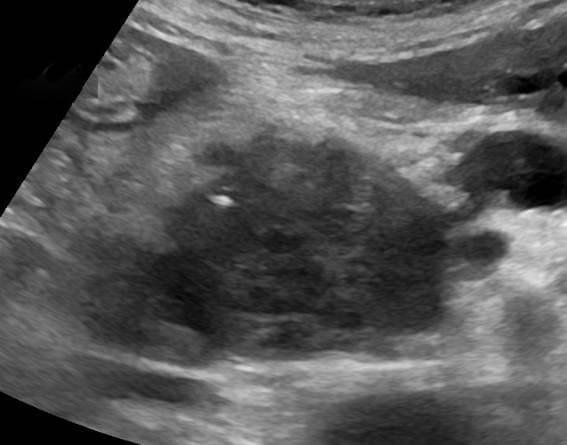
Ultrasound showing pancreatic cancer in an 86 year old man
Surgery may remove the tumor but not the underlying condition. That means that cancer can regrow if you haven't fixed the real cause of it. If cancer spreads to other areas of the body, surgery is useless, especially in difficult spots.
You shouldn't be afraid of these survival rates if you go the natural route. Worry about the cancer rate only causes stress, which only worsens your condition. Besides, five-year survival rates are bogus anyway.
In 2020 the US will have an estimated 57 600 new cases of pancreatic cancer. Of those 47 050 people will die from the disease. Most cases (93%) develop in the pancreas' exocrine tissue, and the rest becomes endocrine tumors (7%).
One major part why we may develop pancreatic cancer is because of stress.
How Stress Causes Cancer
Our emotional trauma has a massive impact on our wellbeing. Cancer patients share similar traits. The most common one is either isolation or rejection from one of their parents.
It is through our bond with our parents that we learn how to feel love and accept ourselves. Most of our relationships with our parents are often stressful and chaotic. If we have critical and condescending parents, we often lack self-confidence.

The most common trauma in cancer patients is either isolation or rejection from one of their parents
Children can't understand that their parent's anger has nothing to do with them. It has more to do with their parents' self-hate.
If parents are loving and caring, their children often become self-confident. They will cherish and respect themselves and others more.
Our parents are not solely responsible for our suffering. Teachers, bullies, society, and other children can also affect our self-esteem. Cancer patients often share the same emotional traits.
Cancer Patients Suffer From Rejection From One Or Both Parents
Dr. Brodie was a holistic practitioner. He focused on alternative and integrative medicine in the early 70s. Dr. Brodie treated thousands of cancer patients for fifty years. He then observed specific personality traits and stressors in all cancer patients.
Dr. Brodie noticed that suppressed anger was the most common emotion in cancer patients. They often felt rejected by one or both parents. This rejection from the parent doesn't mean that they didn't love them.
The parent might have been sick, which hindered that person from taking care of them. Or the parent worked hard to provide for the children and barely saw them after work. Your parents might have childhood trauma, which makes it hard for them to express love.

Suppressed anger is the most common emotion in cancer patients from the rejection by one or both parents
One cancer patient that I knew died of bone cancer. I later heard that her parents were missionaries. They focused more on the church than their family.
She also grew up with five other siblings close in age, so she didn't get much affection from her parents. I heard that she was angry at God and society before she died.
Whatever the reason why your parents couldn't give you full affection doesn't matter. What's important is that you love yourself. Harboring anger towards your parents only creates suffering. It won't heal your cancer.
Common Traits In Cancer Patients
Many cancer patients harbor long-suppressed toxic emotions, such as anger, resentment, or hostility. And many have great difficulty expressing their feelings. Because of this emotional trauma, they are bad at coping with stress.
One famous example of pancreatic cancer was Steve Jobs. Let's look at his upbringing.
Steve Job's Pancreatic Cancer Story
Steve Jobs was an American entrepreneur, businessman, inventor, and industrial designer. He was the co-founder, chairman, and (CEO) of Apple. Steve Jobs died of pancreatic cancer in 2011.
He was born on February 24, 1955, in San Francisco. His biological mother was an unwed graduate student named Joanne Simpson. And his biological father was a native Syrian named Abdulfattah John Jandali.

Steve Jobs in the 1972 edition of the Pegasus yearbook produced by Homestead High School
Steve was born out of wedlock and put up for adoption. Paul and Clara Jobs were a lower-middle-class couple that had settled in the Bay Area after the war. Joanne agreed to have her baby adopted by them, under the condition that they later send him to college.
Paul and Clara called their new son Steven Paul. While Steve was still a toddler, the couple moved to Santa Clara County, later known as Silicon Valley. They adopted another baby girl called Patti, three years later in 1958.
Steve was notorious for his anger issues, a typical trait in cancer patients.
How Steve's Abandonment By His Parents Gave Him Anger Issues
Steve was an emotional child and adult. In his autobiography, you can read about his angry outbursts at his employees. He often yelled at his workers and demanded a lot from them.
From an early age, Steve Jobs knew that he was adopted and felt the pain from his parents' rejection. Because of that abandonment, he felt like the chosen and special one. Those concepts became part of who Jobs was and how he regarded himself.

Steve Jobs was known for his angry outbursts at his employees, picture by Matthew Yohe
His desire for complete control derived from the abandonment he felt at birth. He wanted to control his environment and saw the product as an extension of himself.
Jobs kept a friendly relationship with his biological mother, Joanne Simpson. Over the years, she and his biological sister Mona would often spend Christmas at Jobs's house. He still had no desire to see his biological father.
I will explain later how his incident with his ex-girlfriend might have been the cause of his cancer. Before you can understand it, you need to learn why our emotional trauma causes cancer.
Dr. Hamer's Accidental Cancer Discovery
When I started my blog, I wanted to learn the common causes of cancer. One of my biggest epiphanies was when I discovered the work of Dr. Hamer. I have mentioned his work many times on this site.
Dr. Ryke Geerd Hamer was a doctor who worked at a hospital in Munich, Germany. One day he learned that his son Dirk Hamer died. The murderer was an Italian prince that killed him during a freak accident.
Not short after, Dr. Hamer developed testicular cancer. At that point in his life, he had never experienced any severe diseases. Hamer thought it was strange that cancer grew in his body. He later believed that his son's death might have been behind his cancer growth.

Dr. Ryke Geerd Hamer
Dr. Hamer worked at a cancer clinic and asked thousands of patients about their experiences. He found out that everyone had some trauma before their cancer growth. Hamer was able to interview and do Ct-scans of thousands of cancer patients.
After he gathered all the data, he made a remarkable discovery. Hamer found a white spot on CT-scans of every cancer patient. Patients with a similar diagnosis had this concentric ring in the same place on the CT-scan.
Dr. Hamer realized that each patient had some trauma that caught them off guard. The body then utilized specific biological programs to deal with the problem.
Cancer Starts After An Emotional Shock
Every cancer starts with a painful, acute, dramatic, and isolating shock. The distress happens in the psyche, the brain, and the organ at the same time.
According to Dr. Hamer, once a perceived conflict or shock occurs, it impacts the body in a particular way. The brain cells affected by the shock relay it to the corresponding organ or gland.
The traumatic event is often beyond the patient's control. Examples include losing a loved one, business, job, home, or some other major disaster. It is not a stressful event that causes cancer, but our inability to cope with the situation.

Cancer manifests after an emotional trauma that strikes one out of the blue
Cancer is not an accident, but rather a response to a stressful event. The problem is that our body can't see the difference between an imagined or real situation.
Your body will trigger the same response when you get chased by a bear or imagine it. That's why our worry and stress can trigger the cancer response even if we're not in a dangerous situation anymore.
Animals are better at letting go of a stressful situation than humans. Have you ever seen ducks fight? One duck will attack the other duck if it's too close. After the fight, both ducks flap their wings to get rid of the toxic energy.
Humans are stuck in their toxic thought patterns, especially if they had a terrible childhood. That's why they can keep the negative incident alive even if it's over.
All diseases are part of biological programs.
Every Disease Is A Biological Program
The body uses different parts of the body to revolve biological issues. Almost every gland and organ are frequency generators that create our emotions.
If the brain needs you to be angry, it tells the liver or gallbladder to generate those emotions. You will then be aware of the situation and act accordingly.

Cancer is a biological program
Dr. Hamer noticed that all diseases have two phases. We have the disease phase when cancer grows. If you resolve the situation, you go to the healing phase. The problem is that most people go in and out of the healing and disease stage.
They have a problem with letting go of their negative thoughts. When they discover that they have cancer, they become even more stressed. That shock can lead to secondary cancers.
Even if survival rates seem slim according to doctors, cancer is still not a death sentence.
Cancer Is Not A Death Sentence
Many people treat cancer as a lethal disease that ought to kill them. They then use toxic treatments such as chemotherapy that end up killing them.
Cancer is not a disease but rather a survival mechanism of the body. When we stop seeing it as our enemy, we can relax and fix the underlying emotional cause. The body can then go back to homeostasis. It's a process when the body wants to return to a healthy state.

Self-love is the key to reversing cancer.
If you don't want to experience cancer anymore, you need to let go of the trauma. If you still dwell on it, you will only repeat the healing and disease stage.
So let's explore what Dr. Hamer discovered about pancreatic cancer. Remember to read this blog post to the end to learn a natural treatment for pancreatic cancer.
Emotional Causes Of Pancreatic Cancer
Pancreas Gland
The biological conflict linked to the pancreas gland is an indigestible morsel conflict. Arguments with family members often bring on the conflict. It can be a fight over an inheritance, a property, or money. Or the trigger can be insults or accusations that are hard to digest.
During the conflict-active phase, cells in the pancreas gland grow. The purpose of the cell increase is to enhance the secretion of pancreatic juices. By doing so, the body can better digest food.

The biological conflict linked to the pancreas gland is an indigestible morsel conflict, picture by OpenStax College
Pancreatic cancer develops as a result of continuing cell growth. If the cell division exceeds a specific limit, doctors see cancer as "malignant." If it's below that limit, they regard it as "benign" or a polyp.
During the conflict resolution, fungi or mycobacteria remove the cells no longer needed. Healing symptoms are indigestion, abdominal pain because of the swelling in the pancreas.
The extent of the symptoms depends on the duration of the conflict-active phase.
The Pancreatic Ducts
The biological conflict linked to the pancreatic ducts is a territorial anger conflict. Or it's an identity conflict. A person's gender, laterality, and hormone status affect where cancer grows.

The biological conflict linked to the pancreatic ducts is a territorial anger conflict, or a identity conflict, picture by OpenStax College
Gender, Laterality, Hormone Status | Biological Conflict | Affected Organ |
|---|---|---|
Right-handed male (NHS) | Territorial anger conflict | Stomach, Bile ducts, Pancreatic ducts |
Left-handed male (NHS) | Territorial anger conflict | Rectum Surface Mucosa |
Right-handed male (LTS) | Identity conflict | Rectum Surface Mucosa |
Left-handed male (LTS) | Identity conflict | Stomach, Bile ducts, Pancreatic ducts |
Right-handed female (NHS) | Identity conflict | Rectum Surface Mucosa |
Left-handed female (NHS) | Identity conflict | Stomach, Bile ducts, Pancreatic ducts |
Right-handed female (LES) | Territorial anger conflict | Stomach, Bile ducts, Pancreatic ducts |
Left-handed female (LES) | Territorial anger conflict | Rectum Surface Mucosa |
NHS = Normal hormone status LTS = Low testosterone status LES = Low estrogen status
Source: BIOLOGICAL SPECIAL PROGRAMS PANCREAS, GNM
Territorial anger relates to anger in the environment. It's a place which one considers as one's domain literally or figuratively. Typical territorial anger conflicts are:
- Disputes at home
- Anger at school
- Conflicts in senior or nursing homes
- Conflict in the village, town, country
- A fight over a parking place or a toy
- Feuds at work
- Conflict in daycare or playground
- Trauma in the hospital
- Battles over land or property
All these examples can provoke a territorial anger conflict.
The cause of an identity conflict is the inability to find one's position or place in life. An unwanted move, change of school, or change of a workplace can activate the conflict.
Examples of things that can cause this conflict include:
- Feeling unsettled
- Not knowing where to belong
- Not finding one's place in a relationship or within the family
- Not knowing one's place in the group at work
- Not finding one's place in the culture or society at large
- Discrimination against one's belief or sexual orientation
- Not knowing what choice to make
- Not knowing where to go
During the conflict active-phase, there is a loss of cells. The biological purpose is to widen the ducts to increase the flow of pancreatic fluids. Improved metabolism provides you with more energy to resolve the conflict.
Depending on the conflict's intensity determines if cancer stays in the main duct or its small branches. One symptom is mild to severe pain.
Body Parts With The Same Brain Relay
During the healing phase, the lost tissue replenishes through cell growth. Conventional medicine diagnoses it as pancreatic cancer. But the new cells cannot be cancer since the cell increase is a replenishing process.
Healing symptoms are:
- Swelling due to the edema
- A fatty stool
- Elevated pancreatic enzymes(amylase)
- Indigestion
- Abdominal pain
- Acute sharp pain
- Spasms
The extent of the symptoms depends on the intensity and duration of the conflict.
Alpha Islet Cells
The biological conflict linked to the alpha islet cells is a fear-disgust conflict. Or it's a resistance conflict. It depends on a person's gender, laterality, and hormone status.

The biological conflict linked to the alpha islet cells is a fear-disgust conflict or a resistance conflict, picture by OpenStax College
Gender, Laterality, Hormone Status | Biological Conflict | Affected Organ |
|---|---|---|
Right-handed male (NHS) | Resistance conflict | Beta islet cells |
Left-handed male (NHS) | Resistance conflict | Alpha islet cells |
Right-handed male (LTS) | Fear-disgust conflict | Alpha islet cells |
Left-handed male (LTS) | Fear-disgust conflict | Beta islet cells |
Right-handed female (NHS) | Fear-disgust conflict | Alpha islet cells |
Left-handed female (NHS) | Fear-disgust conflict | Beta islet cells |
Right-handed female (LES) | Resistance conflict | Beta islet cells |
Left-handed female (LES) | Resistance conflict | Alpha islet cells |
NHS = Normal hormone status LTS = Low testosterone status LES = Low estrogen status
Source: BIOLOGICAL SPECIAL PROGRAMS PANCREAS, GNM
A fear-disgust conflict is a fear coupled with disgust regarding a situation or a person. The conflict can be brought on by:
- Sexual abuse
- Violent sex
- Unwanted sexual practices
- Distress involving blood, feces, urine, or vomit
Being frightened of a drunk family member could provoke a fear-disgust conflict. Children suffer the conflict when they have to eat "disgusting" food.
A resistance conflict is strong opposition against a person or situation such as:
- Parent
- Sibling
- Spouse
- Colleague
- Doctor
- Students
- Church members
- Government
- Stepparent
- Relative
- Teacher
- Supervisor
- Colleagues
- Romantic partner
- Hospitals
- Political regime
Decisions made over one's head, or being forced to do something against one's will can also trigger it.
Children suffer the conflict at an early age when they resist daycare or school. Or when they oppose demands.
During the conflict-active phase, the function of the alpha islet cells reduce. The decrease in glucagon production causes hypoglycemia(low blood sugar).
Symptoms of hypoglycemia are:
- Nausea
- Fainting
- A fluttering heartbeat
- Dizziness
- Trembling
Typical for low blood sugar is a craving for sugar and sweets. During the first part of the healing phase, the glucose level slowly rises to normal.
When the conflict-active symptoms reactivate, the blood sugar drops temporarily. At the end of the healing phase, the blood sugar level is back to normal.
Beta Islet Cells
The biological conflict linked to the beta islet cells is a resistance conflict. Or a fear-disgust conflict. It depends on a person's gender, laterality, and hormone status.

The biological conflict linked to the alpha islet cells is a fear-disgust conflict or a resistance conflict, picture by OpenStax College
Gender, Laterality, Hormone Status | Biological Conflict | Affected Organ |
|---|---|---|
Right-handed male (NHS) | Resistance conflict | Beta islet cells |
Left-handed male (NHS) | Resistance conflict | Alpha islet cells |
Right-handed male (LTS) | Fear-disgust conflict | Alpha islet cells |
Left-handed male (LTS) | Fear-disgust conflict | Beta islet cells |
Right-handed female (NHS) | Fear-disgust conflict | Alpha islet cells |
Left-handed female (NHS) | Fear-disgust conflict | Beta islet cells |
Right-handed female (LES) | Resistance conflict | Beta islet cells |
Left-handed female (LES) | Resistance conflict | Alpha islet cells |
NHS = Normal hormone status LTS = Low testosterone status LES = Low estrogen status
Source: BIOLOGICAL SPECIAL PROGRAMS PANCREAS, GNM
During the conflict-active phase, the beta islet cells reduce. It may cause hyperglycemia (high blood sugar) or diabetes. Extreme thirst is a typical symptom of diabetes. It serves the purpose of diluting the high blood sugar level.
The biological purpose of storing glucose in the blood is to prepare you for the resolution. It provides your body with enough blood sugar to fight with full force. The degree of hyperglycemia depends on the intensity of the conflict.
Steve Jobs, which I mentioned earlier in this blog post, had cancer in the islet cells.
What Caused Steve Jobs' Pancreatic Cancer?
Steve Jobs got diagnosed with islet cell carcinoma in 2003. Jobs had a history of conflicts with family members. It started with his relationship with Chrisann Brennan in the 70s. He ended their five-year relationship when Brennan became pregnant with their child.
Jobs denied being the father of the couple's daughter, Lisa, for years after being born in 1978. His relationship with Lisa was up and down. On one visit, he would be playful, and then cold.

Steve Jobs' fight with his ex-girlfriend might have been the emotional cause of his pancreatic cancer
Brennan had a stormy relationship with Jobs. She resented him for his initial denial of fatherhood and his treatment of Lisa. She also felt anger for his limited financial support when she raised Lisa.
This feud continued until his death. Two years before his cancer, this conflict with her might have been too much for him. And this could have been the tip of the iceberg that finally manifested cancer.
Steve Jobs didn't survive from his therapies, but you don't have to repeat his mistakes. Scroll to the end of this article to learn natural treatments for pancreatic cancer.
Summary
The pancreas is a gland in the endocrine and digestive system.
The pancreas plays a vital role in digestion and in regulating blood sugar.
Insulin moves glucose from the blood into muscles and other tissues for use as energy.
Glucagon raises blood sugar levels by breaking glycogen down into glucose in the liver.
Pancreatitis occurs when the pancreas becomes inflamed.
Diabetes develops when there are problems with insulin in the pancreas.
Exocrine cancers are by far the most common type of pancreas cancer.
Our emotional trauma has a massive impact on our wellbeing.
Cancer patients often felt rejected by one or both parents.
Suppressed anger is the most common emotion in cancer patients.
Steve Jobs died of pancreatic cancer in 2011.
Every cancer starts with a painful, acute, dramatic, and isolating shock.
The body uses different parts of the body to revolve some biological issues.
The biological conflict linked to the pancreas gland is an indigestible morsel conflict.
The biological conflict linked to the pancreatic ducts is a territorial anger conflict or an identity conflict.
The biological conflict linked to the alpha islet cells is a fear-disgust conflict or a resistance conflict.
The biological conflict linked to the beta islet cells is a resistance conflict or a fear-disgust conflict.
Steve Job's incident with his ex-girlfriend and daughter might have been the cause of his cancer.
Treatment For Pancreatic Cancer
1. Use an emotional treatment for pancreatic cancer
2. Eat a low-fat whole food plant-based diet
3. Do a liver cleanse
4. Avoid alcohol
Action Steps
If you want to stop pancreatic cancer, you need to look at your emotional trauma. Have you experienced any conflict 6-24 months before your diagnosis?
Letting go of this shock might be the solution to your cancer growth. Make sure to use our emotional treatment for pancreatic cancer below. You should also make sure to change your diet.
Keep your diet low in fat. Eat lots of whole grains, fruits, and vegetables, especially broccoli, cauliflower, or cabbage. Avoid eating animal products, including dairy products.
Fats and cholesterol can contribute to the development of gallstones. Gallstones can lead to problems in the pancreas. Do a liver cleanse to get rid of gallstones.
Don't follow diet plans that promise quick weight loss. Your liver may accumulate too much fat when you follow these extreme diet plans.
A dangerous one is a ketogenic diet. Most of the calories come from fats. Also, make sure to get regular exercise every day.
Don't drink alcohol. Alcohol can increase your risk of pancreatitis and pancreatic cancer.
Learn A Natural Treatment For Pancreatic Cancer
If you want to learn how to reverse your pancreatic cancer, download our free guide.
The Pancreatic Cancer Healing Protocol teaches you 10 natural treatments for pancreatic cancer.
Find out how to fix your emotional trauma, what to eat, detoxes, and much more.



Pancreatic Cancer or Pancreatitis Cancer (Super Strength Oil of Oregano 1st do Patch Test to see if Allergic Drops “MUST” go under the tongue read about this AMAZING Oil